

The ground-breaking Junkers Ju 86P high-altitude reconnaissance aircraft

In 1966 the Israeli Mossad intelligence agency orchestrated the daring defection of an Iraqi pilot in his MiG-21, and eventually passed the fighter on to the Americans for technical evaluation


Image credit: Crown Copyright/MOD
Combat in the Stratosphere
Extreme Altitude Aircraft in Action During WW2
In the summer of 1940 a new German aircraft began appearing in the skies over the British Isles. Unlike the rest of the Luftwaffe's fleet in the Battle of Britain, these aircraft were flying at a height of 40,000 feet - way beyond the reach of the RAF's Hurricanes and Spitfires.
The high-flyer was the Junkers Ju 86P, the world's first warplane equipped with a pressurized cabin. Capable of reaching 42,000 feet, the Ju 86P ushered in a new era of aerial warfare, taking place at previously unimaginable heights.
The success of the Ju 86P spurred the development of a host of high-altitude aircraft by both the Allied and Axis powers during the war, including the Vickers Wellington Mk VI, Vickers Windsor, Boeing B-29 Superfortress, Junkers Ju 388 and Henschel Hs 130. Such aircraft offered obvious tactical advantages: bombers and reconnaissance aircraft could operate safely above the maximum ceiling of the opposing side's fighters, prompting intense development of pressurized interceptors to meet the threat they posed.
Combat in the Stratosphere is the first book devoted exclusively to exploring the fascinating story of the development and operational history of aircraft designed specifically for high-altitude operations during the Second World War.
Publisher: Air World
Available from: Pen & Sword Books, Amazon and good bookshops
Hardback: £20 (UK) ISBN: 9781 39903 6931
Click here to buy
Reviews
'...a fascinating story, well told' Aeroplane
'For anyone even remotely interested in the RAF's struggle to intercept high altitude intruders during WWII, this excellent book is a revelation. Highly recommended.' Pilot magazine
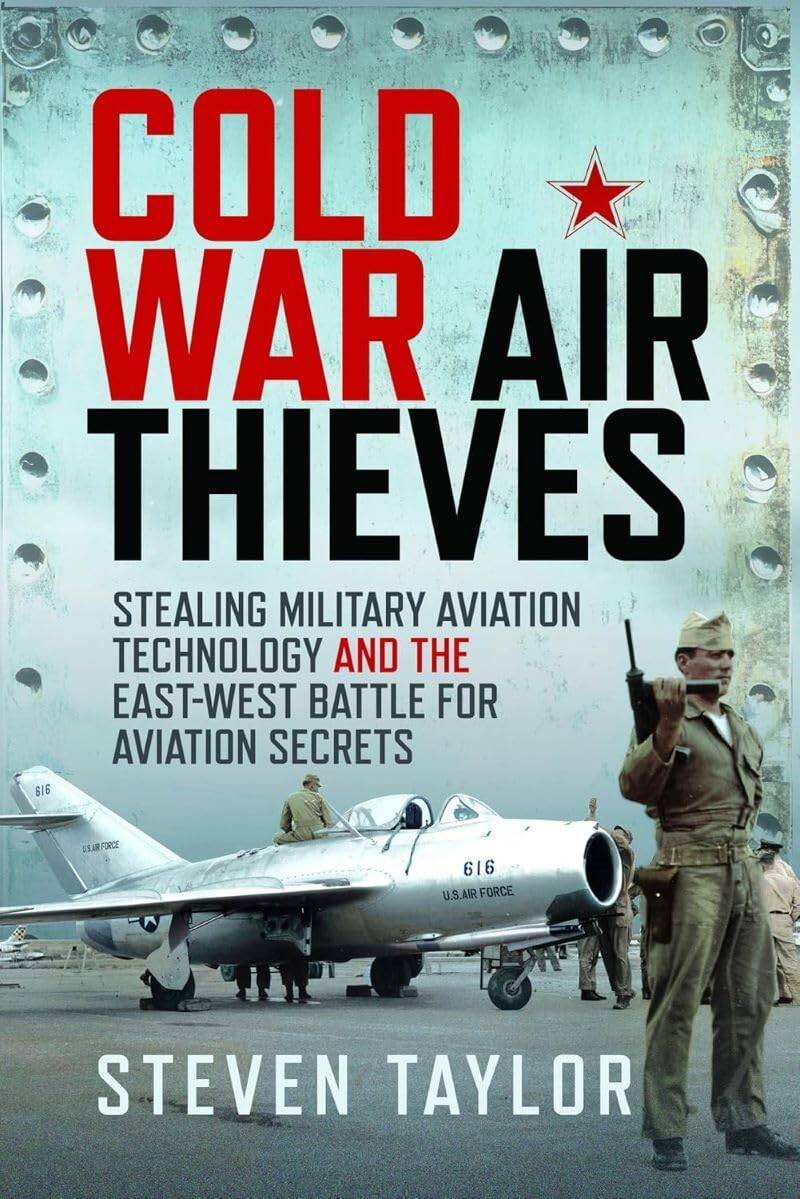
Cold War Air Thieves
The Cold War was a conflict defined by the battle for intelligence. And nowhere was this intelligence war more keenly fought than in the sphere of military aviation. Gaining information on the enemy's latest warplanes was a prime intelligence objective for both sides during the Cold War. Had the Cold War turned hot, the side possessing the greatest knowledge of its opponents' combat aircraft would enjoy a crucial tactical advantage.
Lagging behind the US and its NATO allies in many areas of aviation technology, the USSR also relied heavily on industrial espionage as a means of bridging the technological gap between East and West, shaving years and many millions of roubles off the development process in such key areas as the jet engine, long-range strategic bombers, air-to-air guided missiles, electronic countermeasures and stealth technology.
Recruiting senior engineers and designers working in the opposing side's aviation industries to spy for them, orchestrating the defection of pilots in their aircraft, recovering shot-down wreckage from warzones, even stealing components from under the noses of their enemies - nothing was off limits for the CIA, KGB, MI6 and Mossad in their relentless pursuit of aviation technology.
With the aid of newly declassified official documents, Cold War Air Thieves explores in depth for the first time this hidden war fought by the intelligence services of NATO and the Warsaw Pact countries to obtain by any means necessary the secrets of some of the most potent warplanes ever to take to the skies.
Publisher: Air World
Available from: Pen & Sword Books, Amazon and good bookshops
Hardback: £22 (UK), Introductory offer: £16.50 ISBN: 9781036143497
Click here to buy
Reviews
'compelling...exceptionally well-researched' Soldier magazine
Air War Northern Ireland
Britain's Air Arms and the 'Bandit Country' of South Armagh, Operation Banner 1969 - 2007
During the decades of violence in Northern Ireland known as 'The Troubles', South Armagh was a hotbed of IRA activity and by the mid-1970s had acquired a reputation as the most dangerous part of the province for the British Army and Royal Ulster Constabulary, earning it the nickname 'Bandit Country'.
In this largely lawless region, the threat of roadside bombs made the security forces heavily dependent on helicopters to conduct day-to-day operations and resupply isolated bases, leading the IRA's feared South Armagh brigade to wage a relentless campaign against military aircraft operating in the area. Attacks on aircraft by terrorists armed with everything from WW2-era rifles to fifty-calibre heavy machine guns and rocket-propelled grenade launchers became a feature of the war in South Armagh, leading to the arming of some helicopters for self-defence by the late 1980s.
Drawing on a wide range of sources, including newly declassified government documents and the accounts of aircrew, Air War Northern Ireland tells the little-known story of the battle between the IRA and the British military for control of the skies over 'Bandit Country'.
Publisher: Pen & Sword Books
Available from: Pen & Sword Books, Amazon and good bookshops
Hardback: £19.99 (UK), $39.95 (US) ISBN: 9781 52672 1549
Paperback: £14.99 (UK), $29.95 (US) ISBN: 9781 39902 0374
ebook: £4.99
Reviews
'well-researched and often riveting' Aviation News
'Written in a highly readable and concise style by freelance journalist Steven Taylor, the narrative rattles along and numerous first-hand accounts provide a dramatic flavour of what it was like to be part of "the UK's Vietnam"' The Aviation Historian
'The linear narrative is well written and flows well' Society of the Friends of the National Army Museum
'Should appeal to both military aviation enthusiasts as well as those with an interest in recent British military history' Books Ireland
'Greatly enjoyed reading about this interesting aspect of the "Troubles"' Goodreads
Create Your Own Website With Webador